

Bridging Visas

Bridging Visas
Bridging Visas are not “standard” visas, yet a lot of our prospective clients ask us about them, and they are often misunderstood. They are definitely not like ordinary visas that allow you to visit Australia or to remain in Australia. They do a very specific job.
Please note that this page will deal with the standard bridging visas that our clients will normally be involved with, and not the compliance visas for overstayers or some of the specialized bridging visas.
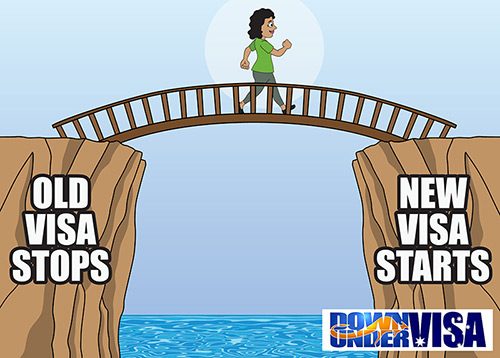
What does an Australian Bridging Visa do?
A bridging visa is a bridge between two visas. It’s purpose is to keep a non-citizen (someone who isn’t an Australian Citizen) lawfully in Australia. In other words it keeps you out of trouble, and takes away the risk of being deported or ending up in an Immigration detention center. It means you have a visa….instead of having no visa at all, usually because the previous visa expired.
What is an Australian Bridging Visa NOT?
A bridging visa is NOT an alternative to a partner visa because you:
- Do not have money for an application
- Are not ready to marry and therefore not ready to apply
- Can’t decide which visa option
If that were the case, it would be called an “Island Visa”, because it would be a resting spot while you sorted yourselves out. No Island Visas exist, I’m sorry to say.
It’s also not an alternative to any other sort of visa. So if you were planning to apply for a bridging visa instead of another type of visa, please think again.
How do you apply for a Bridging Visa?
In most cases you do not apply for a bridging visa. In most cases it’s granted automatically and not a separate application at all. We’ll explain below about the main Australian Bridging Visas and how you acquire one.
Common Bridging Visas - Bridging Visa A (BVA)
A Bridging Visa A (BVA) is probably the most common of Australia’s bridging visas. This is the visa they issue when:
- You hold a “substantive visa”, ie not another bridging visa
- This visa has not expired or been cancelled
- You apply for another substantive visa onshore (inside Australia) and make a valid application (ie correct form, correct place, correct Visa Application Charge paid, etc)
- The current visa expires after you make the new visa application
- The new visa application hasn’t been finalized (ie still being processed)
When you do all these things, they will normally issue* a Bridging Visa A (BVA) automatically, and it will be issued when the existing visa runs out. When one visa expires on its last day at midnight, the BVA begins.
- It happens automatically.
- It requires no separate visa application form
- There is no fee
*I say “normally” because this is not a definitive guide to how to prepare your own visa application. It is general information and not specific information, for a complex set of laws that make up Australian Migration Law. Consult a Registered Migration Agent if you care about the result.
What does the BVA allow you to do?
It lets you remain in Australia lawfully (ie legally) during the processing of the new visa, regardless of how long this processing takes. If the visa application took several years, the bridging visa would remain during this time.
It may include work rights and/or study rights, or it may not. Normally it has the same Conditions as the visa it replaced, ie if it replaces a tourist visa with no work rights, then it will normally be granted with no work rights. However in cases where you apply for a partner visa, the bridging visa will normally be granted with work rights.
What it does NOT allow the holder to do is to travel overseas. If you travel overseas with a Bridging Visa A, it will cease and the visa holder will be unable to return. For an onshore partner visa applicant (where the applicant must be inside Australia for the visa to be granted) this is an especially tragic outcome!
Common Bridging Visas - Bridging Visa B (BVB)
A Bridging Visa B (BVB) is virtually a variation on a BVA, and it has a very specific purpose. A BVB is to allow a BVA holder to travel overseas and to return again.
How to you get a Bridging Visa B?
This is a bridging visa that you DO apply for. Application form and payment, and you wait for it to be processed.
- You need to be inside Australia when you apply
- You need to hold a Bridging Visa A at the time of application (OR a Bridging Visa B with an expired specified travel period)
- Note that this means you can’t get one if you have a Bridging Visa C
- You need to have a travel itinerary, ie not necessarily tickets purchased, but you should have existing travel plans. It’s not possible to get an open-ended BVB.
- You need to have a good reason to travel outside Australia at this time.
The BVB will in fact replace the currently-held BVA.
Conditions of a Bridging Visa B (BVB)
If/when granted, the BVB will come with a permitted travel period. If, say, you had applied to visit Thailand from 9th of October to 21st of November, they would probably grant the bridging visa with a specified travel period of 1 October to 30 November.
Now, it’s essential for a visa holder to comply with the specified travel period, ie not to try to return to Australia after the travel period has ended.
As stated already, the BVB will replace the BVA. And it will remain in place and function as a replacement for the BVA until the processing of the second visa has been finalized.
Please CONTACT US if you need a Bridging Visa B
And if you realise now that you were on the wrong track regarding applying for bridging visas instead of the correct visa, please let us assess your case and advise you via our free ONLINE ASSESSMENT FORM. It will take you five minutes.
Common Bridging Visas - Bridging Visa C (BVC)
A Bridging Visa C (BVC) is almost identical to a Bridging Visa A, except it has less flexibility.
- A BVC is issued when a visa applicant applies for an onshore visa after their existing substantive visa has already expired.
- Note that not all Australian visas may be applied-for by applicants who don’t still hold a substantive visa, and even when the new visa MAY be applied-for it is not necessarily a simple process. It can be very complex and may require additional documentation and waiver applications. Again, we strongly suggest using a Registered Migration Agent especially when you arrive at areas like this.
- Bridging Visa C’s do not allow a visa holder to travel outside Australia, and do not allow the holder to apply for a Bridging Visa B to allow travel.
- Bridging Visa C’s do not naturally come with work rights, although it is possible to apply for work rights when you can establish a compelling need to work (ie the income is needed).
Other than that, a BVC functions like a BVA and is issued automatically too.
DISCLAIMER
Information contained in this page is of a general nature. Informative, yes, but not a formula for preparing visa applications and should not be relied on as such. The devil is in the detail, rest assured. Australian migration law is complicated and Departmental decisions are inflexible and often final. Readers and future visa applicants and sponsors are advised to rely on professionals to ensure a happy outcome.

Australian Bridging Visas From Thailand FAQ
Have A Bridging Visa Question Not Answered Above?

Now, over to you the client (or potential client)! We value our clients opinions, and we believe in keeping all well-informed. What would YOU like to ask about bridging visas? What do YOU think needs a bit more explanation? Ask below, and Jeff Harvie RMA will answer your question for you and for others wondering the same thing.
Further Reading
Want to read more about Bridging Visas for visa applications from Thailand? Check out some of our bridging visa BLOG posts below. Bridging visas can you get one Bridging Visa B Australian Bridging Visas Bridging Visa B – The essential facts
More On bridging Visas From Our BLOG Page...
Bridging Visas – The Facts
A Bridging Visa is a very useful safety net for those who apply for onshore visas (ie. Australian visas applied for inside Australia, and definitely not visas applied for in Manila).
What are bridging visas for? They keep the applicant lawful in Australia. They stop the applicant from becoming that most undesirable state of being an “unlawful non-citizen”, which is the cool modern term for being illegal.
Being unlawful means leaving yourself open to forceful deportation, and/or spending time in a detention center. It means being unable to apply easily for further visas. I won’t say it’s impossible, but it’s not so easy. It means needing compelling and compassionate circumstances, and needing to meet some strict conditions. In short, you must do whatever you can to avoid becoming unlawful.
Can you apply for a bridging visa?
A bridging visa is just like its name implies. It’s a bridge between visas, and nothing more. Yet there is a massive amount of misunderstanding out there amongst the visa-needing public about the bridging visa being this easy visa to apply-for when you find yourself not ready yet for a proper visa from Thailand to Australia.
What is a bridging visa?
A bridging visa is one thing and one thing only. It’s a way to keep a visa applicant lawfully in Australia when they don’t have a substantive visa (which means basically a “proper visa”). It stops the applicant being in migration no-mans-land and being at risk of detention and deportation.
It is NOT an easy visa choice when you’re still making your visa choice. It’s not even something you directly apply-for. You cannot walk into the Department of Immigration and Border Protection (DIBP) and ask for “One bridging visa please?”