
Filipino food and diet. Is it nutritious?

I’m not sure what reaction I’ll get from this, but here goes anyway! Some important discussion for Australian Filipina couples on the topic of Filipino food. You are marrying a Filipina lady, or you’ve already done so. She will soon be migrating from Philippines to Australia, and may even be bringing children with her as part of your new family. And like all Filipinos, she and the kids will be accustomed to a Filipino diet. Yet as you said in your partner visa application, you intend to be and to remain together as a committed couple, and that means that “her business” is NOT “none of your business”. You will be leading a shared life, and that means your opinion does definitely matter.
Filipino diet and it’s nutritional value
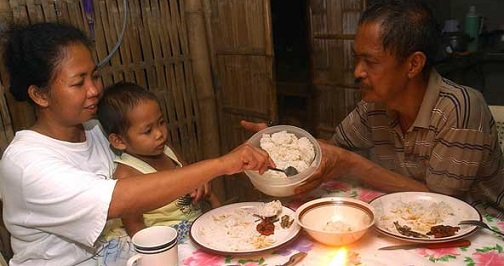
Filipino diets are generally (and not I said “generally” and not “always”):
- Low in protein (low meat consumption)
- High in fat (fried foods, and leaving fat on meat)
- Vegetable consumption rare or non-existent
- High carbohydrate consumption (notably from too much rice)
- High consumption of junk food and soft drinks
- And doctors prescribe vitamins and milk-products to try to make up for dietary insufficiencies, which you never see in Australia.
You need to decide between yourselves as a couple if you wish to continue this or not. It IS your business, because it could affect your kids and their health as well as influence the future health of your wife. Skinny kids with mouths full of rotting teeth, or wives with diabetes and hypertension (known as "high blood"!), not a nice prospect.
Low protein Filipino diets
This is generally due to the cost of meat. Many Filipino families can’t afford it, and many a child grows up malnourished. I watched two of my daughters arm-wrestle their slightly-older male cousin and win. Natural enough, because they eat eggs for breakfast and meat every day. Bodies are built of protein, and the amount of meat in a normal Aussie diet will make a big difference and shouldn’t cause too many arguments.
High fat Filipino diets
Most Filipino families will eat fat. The pork adobo you get in the Philippines most likely has lumps of 1/3 meat and 2/3 fat. Most Filipinos will eat that fat! Saturated fat with high cholesterol is probably beneficial to Eskimos, but not much value for anyone else….especially if you don’t want heart disease. Get rid of the lumps of fat.
Low vegetable consumption in the Philippines
I have had a number of kids come and live with us over the years who were totally unaccustomed to eating any vegetables, and have met a few adults the same. Strange, because vegetables can be found in abundance in Philippines, and generally fairly cheap too. There is a perception amongst many that this is what the poorest people eat, therefore they don’t want to. Strongly advise you to change that perception and practice immediately. Vitamin A, Iodine, Iron, Calcium, Selenium and Zinc deficiencies are very common in Philippines, and not surprising when you consider the diet. I introduced (quite firmly!) a number of kids over the years to vegetables, and just watched them grow rapidly as a result. I hope you can do the same.
Excessive rice consumption in the Philippines
Rice is a source of instant carbohydrate. Fills the belly and provides fairly quick energy, but does not much else. Low protein, and very few vitamins or minerals. It doesn’t build bodies! Many Filipinos consume 6, 7, 8 cups of rice a day! The issue….which even the Philippines health department recognizes….is twofold:
- Too much carbohydrate, especially high GI (Glycaemic Index) carbs, which can lead to diabetes
- A belly full of rice means a belly NOT full of protein, vitamins and minerals. The rice takes the physical place of vital nutrients which are not being eaten!
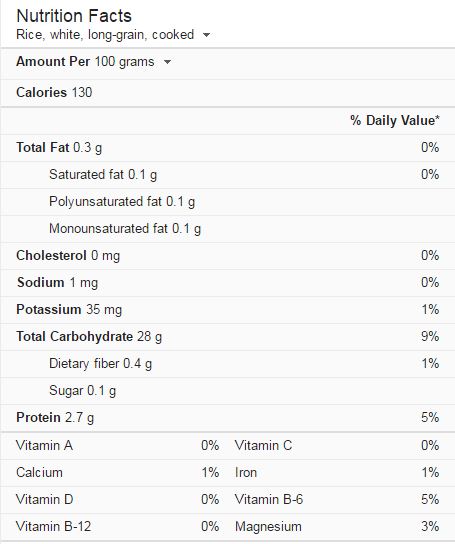
Health experts recommend no more than 1 cup of rice per day for an adult!
What is a healthy diet for Filipino adults and kids?
This is what our kids eat in the Harvie household:
- 1/3 meat, 1/3 vegetables, 1/3 carbohydrate (rice or pasta or potato)
- No consumed fat (ie. we get the butcher to remove it completely)
- More baking and less deep-frying
- Less processed snack foods and soft drinks
Try it! And that means REALLY try it. Not “Well, I gave them vegetables, but they didn’t like them!” Put the food on the plate, and let them leave the table when the plate is empty. (And I’m talking about kids here. Not suggesting you don’t let your wife leave the table!)
Try it and see what a difference it makes after a few months.

Who are Down Under Visa? Who is Jeff Harvie?
Jeff Harvie and the Down Under Visa team have been doing this for a lot of years! Down Under Visa have brought thousands of couples to Australia from South East Asia over the years. Mostly from the Philippines, but we help increasing numbers of couples where the visa applicant is from China, Thailand, Vietnam or Cambodia. And what this means is we see a lot of success....and we also see failures when people go it alone after talking to their mate, or their relative, or that minimal-care-no-responsibility Facebook group run by Steve and Maribeth based on their own visa application! One application, and they feel qualified to advise others! It's not even LEGAL to do that!
Want to bring your sweetheart to Australia from The Philippines, Thailand, Vietnam, Cambodia or Southeast Asia? Get a FREE VISA ASSESSMENT today! It won't take you long, and you will be rewarded with a clear and detailed assessment that will tell you everything you need. One assessment only!