

Dengue Fever in Philippines – Awareness for Australians

Dengue Fever is something that all Australians in Australian Filipina relationships should be fully aware of for your own safety when you visit Philippines. Dengue Fever is almost unheard of it Australia, and Aussies are fairly relaxed about mosquitos. The Harvie family has just had to deal with it personally when it knocked Jeremy off his feet for a bit, so it’s fairly prominent in our minds. Seemed like a good time to discuss Dengue, and it’s always a good time to be acutely aware so hopefully you won’t need to deal with it.
Disclaimer: I am NOT a doctor, and this is not “medical advice”! This is merely a bit of knowledge by an experienced amateur who says categorically "SEE A DOCTOR"!
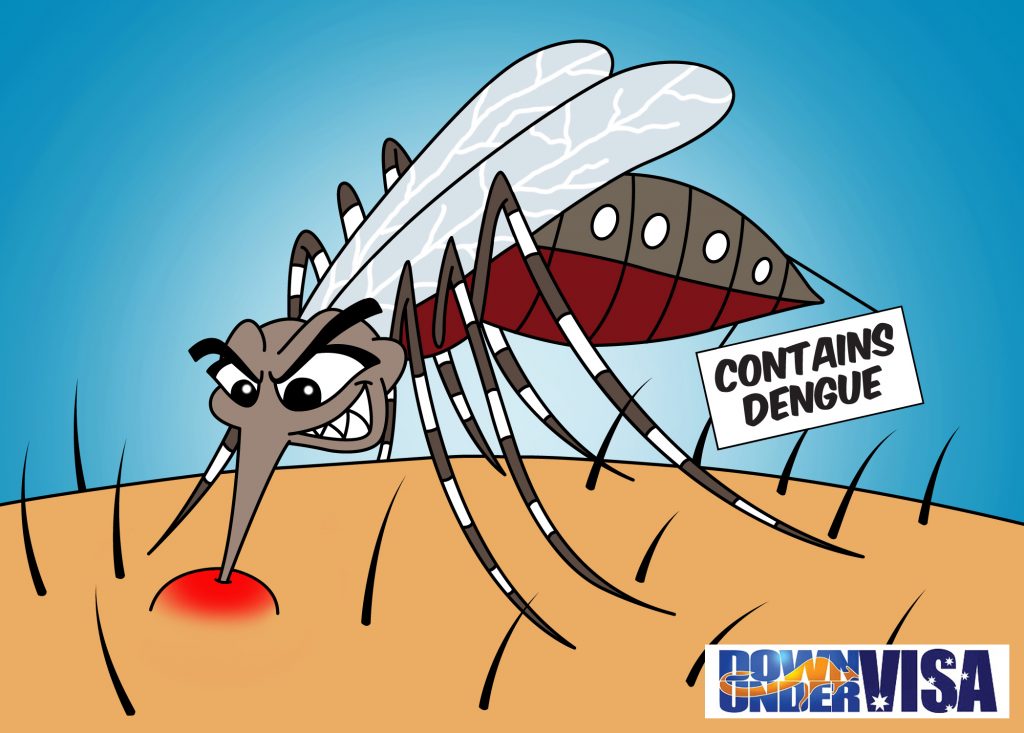
What is Dengue Fever?
Dengue is a fairly debilitating illness which can lead to death in less that 1% of cases. It’s a virus spread by mosquitos that have already fed on an infected person. They take a bite of someone infected with Dengue, and they spread it by stinging another person. Therefore the more infected people and the more mosquitos, the more rapid the spread.
If Philippines were a dry desert or a freezing cold place, then this would be less of a problem. However the Philippines is a hot and humid place with regular rainfall all year round, and it also has a high people-per-square-kilometer ratio. It also has a lot of people who don’t see doctors regularly and are therefore wandering around infected and waiting to be bitten. All of this means that conditions are rife for the spread of the disease. And times of high rainfall mean more mosquitos, therefore rainy seasons contribute to higher risk and incidence of disease spread.
Symptoms
Symptoms can vary in both incidence and severity, so it’s not that easy for the layman to say categorically whether someone has Dengue or not.
Symptoms can include:
- Sudden high fever (usually around 40°C)
- Severe headaches
- Pain behind the eyes
- Severe joint pain and muscle pain
- General fatigue
- Nausea and vomiting
- Skin rash with red spots
Blood test results
Characteristics of Dengue infection in a blood test are:
- Low White Blood Cell count
- Low Platelets
White blood cells (WBC) are the blood cells that are involved with protecting the body against disease. Low levels indicate that the body is battling against infection. Platelets are the clotting elements of blood. Low levels mean that the body is less able to form clots when there is bleeding.
All of this equates to a weakened body that is less able to cope with infection, and can lead to Dengue Haemorrhagic Fever. That means severe bleeding and plasma leakage and associated organ damage.
Treatment
There is no medication available for the treatment of Dengue at this time and no reliable vaccines. The only real treatment is to help the patient to recover naturally, ie.
- Rest
- Paracetamol for the fever
- Drinking plenty of fluids
Getting daily blood tests to monitor WBC and Platelet levels is vital, as if it doesn’t start improving rapidly then hospitalization may be necessary. That means a dextrose drip in the arm to get fluids rapidly into the system, more regular blood testing and possible blood transfusions if platelets drop to a dangerous level.
Tawa Tawa
This is a herb/plant/weed that grows everywhere in the Philippines. Euphorbia hirta is its proper name. It appears to increase blood platelet levels, and is even endorsed by the DOH (Department of Health). Boiled and drunk three times a day. Highly recommended by many, including Jeremy’s doctor.
Avoiding Dengue
My main recommendation to all is to do what you can to avoid getting bitten by mosquitos! The mosquito species which spreads Dengue is more active early morning and around dusk, so be particularly careful around these times. Our house rule is that no one….especially children….goes outside and wanders around from 5:00pm onwards. We’re particular about fly screens and keeping doors closed, and any sign of a mosquito in the house means the mosquito coils get lit! Do the same!
You should also avoid outdoor gatherings or gatherings in poorly-screened houses with large crowds of people, especially during rainy seasons when there are plenty of mosquitos around. And avoiding letting grass and weeds get too long, plus removing containers, old tyres and places where the rotten little things can breed!
And if any of those possible symptoms appear? Get to the doctor and get a blood test immediately, so treatment can start immediately. Blood tests are very cheap here, and you can just walk into a hospital and get one done. Take getting a diagnosis seriously, and take treatment seriously!

Who are Down Under Visa? Who is Jeff Harvie?
Jeff Harvie and the Down Under Visa team have been doing this for a lot of years! Down Under Visa have brought thousands of couples to Australia from South East Asia over the years. Mostly from the Philippines, but we help increasing numbers of couples where the visa applicant is from China, Thailand, Vietnam or Cambodia. And what this means is we see a lot of success....and we also see failures when people go it alone after talking to their mate, or their relative, or that minimal-care-no-responsibility Facebook group run by Steve and Maribeth based on their own visa application! One application, and they feel qualified to advise others! It's not even LEGAL to do that!
Want to bring your sweetheart to Australia from The Philippines, Thailand, Vietnam, Cambodia or Southeast Asia? Get a FREE VISA ASSESSMENT today! It won't take you long, and you will be rewarded with a clear and detailed assessment that will tell you everything you need. One assessment only!