
Australian Partner Visas: The Ultimate Guide to Avoiding Refusal Traps

Navigating the Australian Partner Visa: The Ultimate Guide to Avoiding Critical Refusal Traps
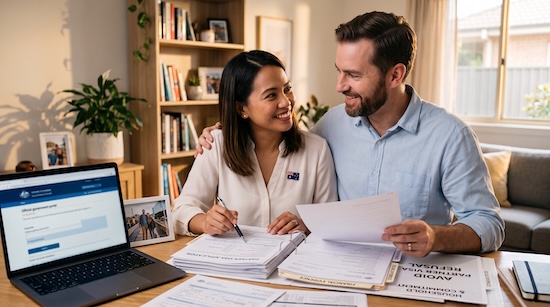
Australian Partner Visa refusals rarely stem from a lack of genuine affection; they are overwhelmingly caused by preventable evidentiary, procedural, and timing mistakes. Over 75% of rejections occur because DIY applicants submit generic proof (like photos and marriage certificates) instead of substantiating the four statutory pillars: financial, household, social, and commitment.
To maximize approval chances:
-
Treat the application as a legal audit: Lodge a 100% decision-ready file with correctly categorized documents, personal (non-AI) statements, and detailed third-party declarations.
-
Master the timing: Register your relationship with a State/Territory government if you haven't met the strict 12-month de facto cohabitation requirement, and monitor police and medical check expiry dates (12-month validity).
-
Do not overlook the sponsor: Sponsors face strict vetting regarding criminal history, financial capacity, and lifetime sponsorship limits (maximum of two, spaced five years apart).
-
Address cultural and legal nuances: Clearly contextualize long-distance communication, cross-cultural traditions (such as dowries), and complex civil marital statuses (such as Philippine annulment requirements) without sounding defensive.
Applying for an Australian Partner Visa is one of the most heavily scrutinized, expensive, and emotionally draining immigration pathways available. Despite the high stakes, thousands of unrepresented DIY applicants make entirely preventable errors that lead to unbearable delays or outright refusals. Based on recent 2026 Department of Home Affairs guidelines and emerging processing trends, navigating this system requires more than just proving you are in love. It requires strategic, legally sound evidence presentation. Here is an examination of the four major categories where Partner Visa applications fail, and exactly how you can avoid these costly traps.
Category 1: The Relationship Evidence Trap
A staggering 75% of partner visa refusals cite insufficient or poorly presented relationship evidence. The most common pitfall for DIY applicants is falling into the "generic couple photos plus marriage certificate" trap. A marriage certificate proves a legal event occurred, and photos prove you stood next to each other, but neither proves a genuine and continuing relationship under Australian Migration Law. The Department requires comprehensive, documented evidence across four distinct statutory pillars: financial sharing, the nature of the household, social recognition, and mutual commitment. Failing to thoroughly address all four pillars with concrete documentation is a guaranteed pathway to a refusal.
Equally damaging is the personal relationship statement. Case Officers are looking for a genuine, chronological narrative of your relationship. Instead, many applicants submit a dry, three-paragraph summary that reads like a police incident report. Even more dangerously in 2026, applicants are increasingly relying on AI tools like ChatGPT to write these statements. Case Officers are actively trained to spot generic AI phrasing and synthetic narrative structures. Your statement should be a two to three-page, deeply personal account covering how you met, how the relationship developed, specific milestones, periods of separation, and your future plans together. It must sound like you, ie written in natural language.
This need for specificity extends to the statements provided by your friends and family (Form 888s). Generic support statements that simply declare "they are a lovely couple and very much in love" carry less evidentiary weight. A Case Officer needs concrete, observable facts. A strong statutory declaration says, "I spent Christmas 2024 at their home in Sydney, watched them plan their kitchen renovation together, and saw them navigate her mother's illness as a team." Guide your witnesses to write about specific events they have personally observed.
Furthermore, applicants often misunderstand how communication history should be presented, particularly couples who have spent time apart using platforms like WhatsApp, Viber, or Facebook Messenger. Submitting 500 pages of raw screenshots is chaotic and frustrates the decision-maker. Conversely, a highly edited, heavily redacted summary looks fabricated. The sweet spot is a structured, chronologically dated, and lightly annotated timeline that highlights key moments of emotional and financial support. Finally, never let your evidence go stale. As highlighted in the Department's April 2026 newsletter, lodging evidence from two years ago and failing to refresh it during the lengthy processing period raises an immediate red flag that the relationship may no longer be ongoing.
Category 2: Structural and Procedural Missteps
Even with a genuinely loving relationship and strong evidence, administrative and structural errors can sink your application. The ImmiAccount portal is not a chaotic dropbox; it is a highly structured digital filing cabinet. The Department’s April 2026 guidance specifically flagged the chronic issue of documents being uploaded to incorrect categories. If a Case Officer is reviewing the "Relationship - Financial" section to assess your shared economic burden, they will not go hunting through the "Miscellaneous" tab to find your joint bank statements. Misfiled documents are often treated as missing documents.
GOLDEN RULE: Don’t annoy or iritate the Case Officer who decides your fate!
Another massive structural error is failing to front-load the application. Many DIY applicants lodge a "basic" shell application to secure a Bridging Visa, assuming they can just upload the rest of the documents whenever the Department asks for them. In 2026, lodging an incomplete file is incredibly risky. It quickly triggers a Request for Information (RFI), which stalls your processing timeline for months, or worse, can lead to a refusal if the Case Officer decides not to issue an RFI at all. Your application must be completely decision-ready at the exact moment you hit submit.
However, being decision-ready requires careful timing, particularly regarding health checks and police clearances. Both of these clearances are generally only valid for 12 months. DIY applicants often rush to get their medical exams and police checks done on day one. Because standard processing times can easily stretch to 17 months or longer, these certificates expire before the Case Officer even opens the file. This forces the applicant to pay for and undergo the entire clearance process a second time. A better strategy is to prepare all relationship evidence for lodgement, but wait for the prompt from the Department—or at least wait until a few months into processing—before finalizing medicals and police checks.
Procedural neglect also plagues the permanent stage of the visa (the 801 or 100 stage). Many applicants falsely believe that two years after lodging their temporary visa, the permanent visa is granted automatically. It is not. You must actively log back into ImmiAccount, start the Permanent Partner Visa Assessment form, and provide updated evidence that the relationship has continued over the last 24 months. Missing this crucial step leaves you stranded on a temporary visa indefinitely, or more likely will trigger a demand letter that you finalise this stage in 28 days or less! Lastly, always keep your contact details updated via Form 929. The Department sends critical correspondence—including RFI deadlines and s57 Natural Justice warnings—to the email and address on file. If you move houses or change emails and miss a 28-day deadline, your visa will be refused. Furthermore, if the sponsor and applicant update their addresses separately and inconsistently, it flags in the system that the couple has separated.
Category 3: Eligibility and Timing Fatalities
Timing and eligibility criteria are absolute legislative requirements; there is no room for subjective interpretation or leniency from a Case Officer. One of the most heartbreaking and common reasons for refusal is applying for a de facto partner visa at the 11-month mark. Migration law explicitly requires de facto couples to demonstrate a full 12 months of cohabitation and shared life immediately prior to the date of lodgement. Many applicants, panicking because their student or working holiday visa is about to expire in a few weeks, rush to lodge their partner visa having only been a de facto couple together for 10 or 11 months. This results in an automatic, unappealable refusal because the legislative criteria were not met at the time of application.
There is a vital workaround that unrepresented applicants routinely miss: registering the relationship with a relevant Australian State or Territory government (such as the Registry of Births, Deaths and Marriages in NSW or Victoria). Registering your relationship waives the strict 12-month cohabitation requirement, allowing you to lodge the visa earlier while still satisfying the legal definition of a de facto couple. Failing to utilize this legal lifeline when short on time is one of the most expensive mistakes a DIY applicant can make.
Beyond timing, the second fatal error in this category is treating the partner visa as a one-party application. Applicants pour 100% of their energy into proving their own identity, health, and relationship timeline, completely neglecting the fact that the Australian sponsor must also pass strict eligibility tests. Sponsorship is heavily regulated to protect applicants from exploitation and family violence. Sponsors must provide their own police clearances and declare any relevant criminal convictions.
Furthermore, there are strict statutory limitations on how many people an Australian citizen or permanent resident can sponsor in their lifetime. A sponsor can generally only sponsor a maximum of two partners in their life, and there must be a minimum of five years between the applications. If a sponsor previously brought a partner to Australia four years ago, they are legally barred from sponsoring a new partner today, no matter how genuine the new relationship is. Sponsors also need to demonstrate they have the capacity to support their partner financially. If the sponsor hides prior sponsorships, the entire application will collapse, regardless of how strong the applicant's side of the paperwork is.
Category 4: Cross-Cultural and Regional Complexities
Partner visa applications involving couples from Southeast Asia—particularly the Philippines, Thailand, and Vietnam—face unique scrutiny due to specific cultural and structural dynamics. Case Officers assessing these files look for very specific patterns, and failing to contextualize your relationship appropriately can lead to disaster. The primary hurdle is cross-cultural documentation. Southeast Asian relationships often involve extensive family engagement early in the relationship, including formal family blessings, engagement ceremonies, and in some cultures, the giving of dowries or financial gifts to the bride’s family.
To a Western Case Officer unfamiliar with these traditions, large transfers of money to a partner's parents or rapid, heavily orchestrated engagement ceremonies can look transactional, or worse, like an arranged marriage entered into solely for visa purposes. DIY applicants typically make one of two mistakes here: they either over-explain and sound incredibly defensive, or they provide zero cultural context, leaving the Case Officer to draw their own negative conclusions. The key is to provide objective, natural cultural context in your relationship statement—explaining the significance of a Thai Sin Sod (dowry) or a Filipino Pamamanhikan (formal family meeting)—without sounding like you are trying to justify a transaction.
Distance is another major vulnerability for this demographic. Many of these couples endure long-distance periods where the Australian sponsor travels back and forth for visits. Proving a continuous, shared life when you live 6,000 kilometers apart is difficult. Simply showing flight tickets is not enough. You must prove how you maintain a joint household and intertwined lives remotely. This means providing structured evidence of daily communication, joint decision-making, financial remittances showing regular support, and concrete plans for future cohabitation in Australia. Case Officers assess hundreds of these specific long-distance applications a month; they know exactly what a genuine cross-border commitment looks like versus a superficial holiday romance.
Finally, applicants from the Philippines face a highly specific legal minefield regarding marital status. The Philippines is the only country in the world (aside from the Vatican) that does not have divorce. If either the Filipino applicant or the Australian sponsor was previously married in the Philippines, untangling that legal web is mandatory. A physical separation is not recognized by Australian migration law as an end to a marriage if neither party has taken legal steps to dissolve it. Applicants frequently confuse church annulments with civil legal annulments (Article 36 of the Family Code), or fail to provide a clear CENOMAR (Certificate of No Marriage) or CEMAR (Advisory on Marriages). If an Australian sponsor was married to a Filipino citizen previously, they must ensure their foreign divorce is actually recognized. Submitting contradictory, incomplete, or legally misunderstood marital paperwork in this jurisdiction is a rapid route to a visa refusal.
Who are Down Under Visa? Who is Jeff Harvie?
Jeff Harvie and the Down Under Visa team have been doing this for a lot of years! Down Under Visa have brought thousands of couples to Australia from South East Asia over the years. Mostly from the Philippines, but we help increasing numbers of couples where the visa applicant is from China, Thailand, Vietnam or Cambodia. And what this means is we see a lot of success....and we also see failures when people go it alone after talking to their mate, or their relative, or that minimal-care-no-responsibility Facebook group run by Steve and Maribeth based on their own visa application! One application, and they feel qualified to advise others! It's not even LEGAL to do that!
Want to bring your sweetheart to Australia from The Philippines, Thailand, Vietnam, Cambodia or Southeast Asia? Get a FREE VISA ASSESSMENT today! It won't take you long, and you will be rewarded with a clear and detailed assessment that will tell you everything you need. One assessment only!